Why Early STEM Education Matters
The Critical Window of PreK–1st Grade
The earliest years of school are more than a time for ABCs and 123s. They are a critical window when children begin forming beliefs about who they are as learners. By the time students reach third grade, many have already decided whether STEM is “for them.” These decisions, often made unconsciously, shape the opportunities children pursue later in school and in life.
For some, this means leaning into problem-solving, exploring science, or seeing themselves as natural inventors. For others, it may mean quietly opting out before they’ve even had the chance to begin.
How Early Perceptions Shape Future Opportunities
The reality is clear: STEM skills are not optional for tomorrow’s workforce. Nearly one in four jobs in the U.S. is STEM-related, and that number is only growing. But beyond careers, STEM teaches children to think critically, persevere, and collaborate, skills that benefit every field. If students don’t begin developing confidence early, they risk losing access to opportunities later.
Building Confidence, Creativity, and Access
At Kid Spark Education, our mission is to help all children learn and love STEM. We believe every child deserves the chance to see themselves as capable problem-solvers and inventors. That vision is what inspired the creation of our new Early Childhood STEM and Literacy Program, a comprehensive solution for PreK–1st grade classrooms.
Introducing the Early Childhood STEM & Literacy Program
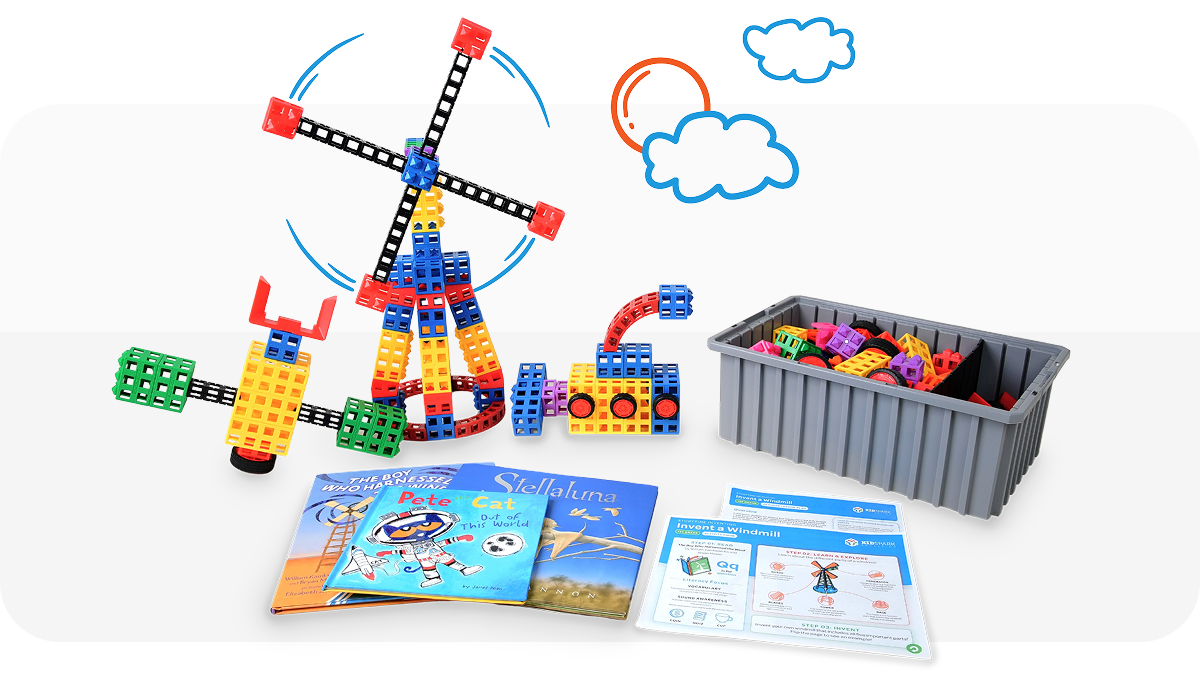
Our new Early Childhood STEM and Literacy Program was designed from the ground up to meet the needs of young learners and their teachers. It doesn’t separate STEM, literacy, and social–emotional learning into silos. Instead, it blends them together in integrated, engaging lessons that make learning feel natural and connected.
The goal is simple but profound: to give students meaningful experiences with STEM and literacy while nurturing their confidence, creativity, and curiosity. Built around hands-on exploration, the program helps children see themselves as capable problem-solvers and inventors from the very start.
About the Program
The Early Childhood STEM and Literacy Program integrates three components that work together to create meaningful, connected learning experiences for young children:
1. The Early Inventors STEM Lab
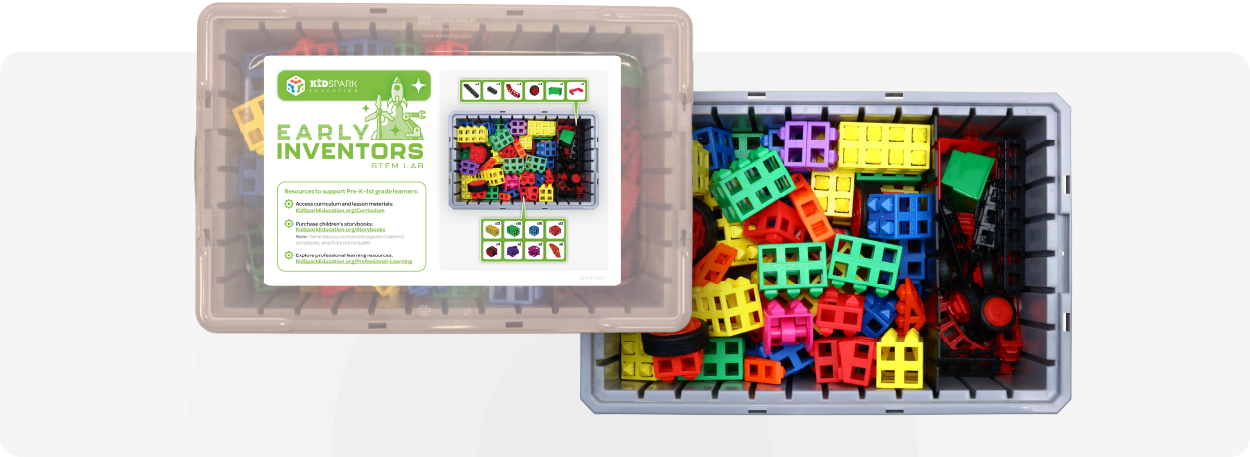
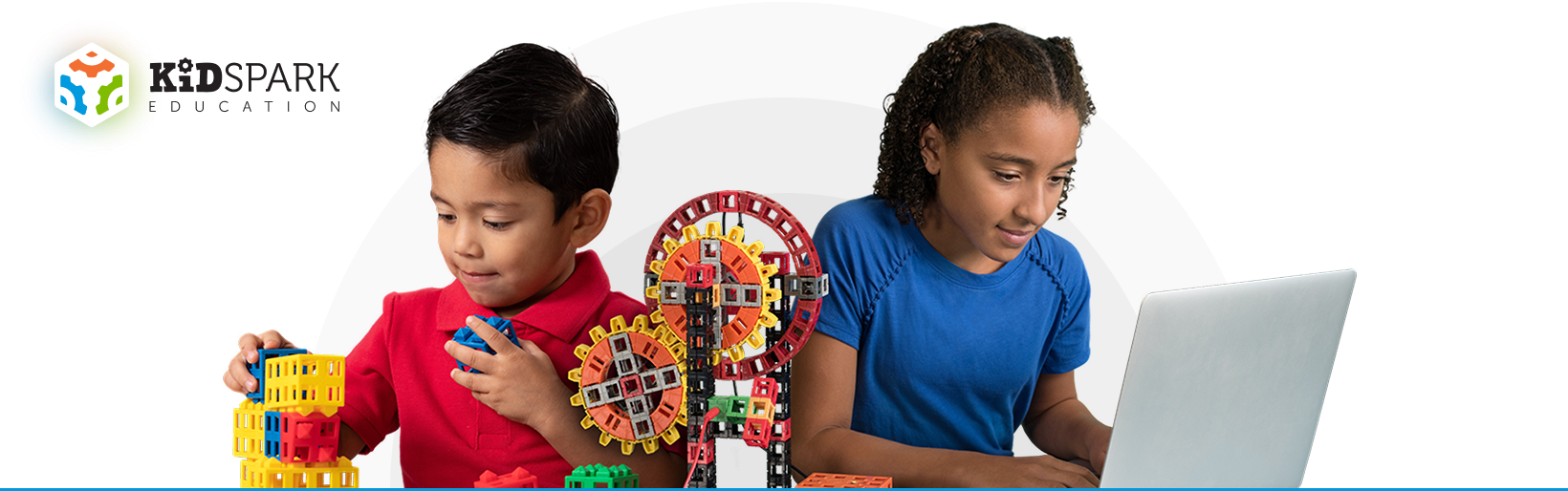
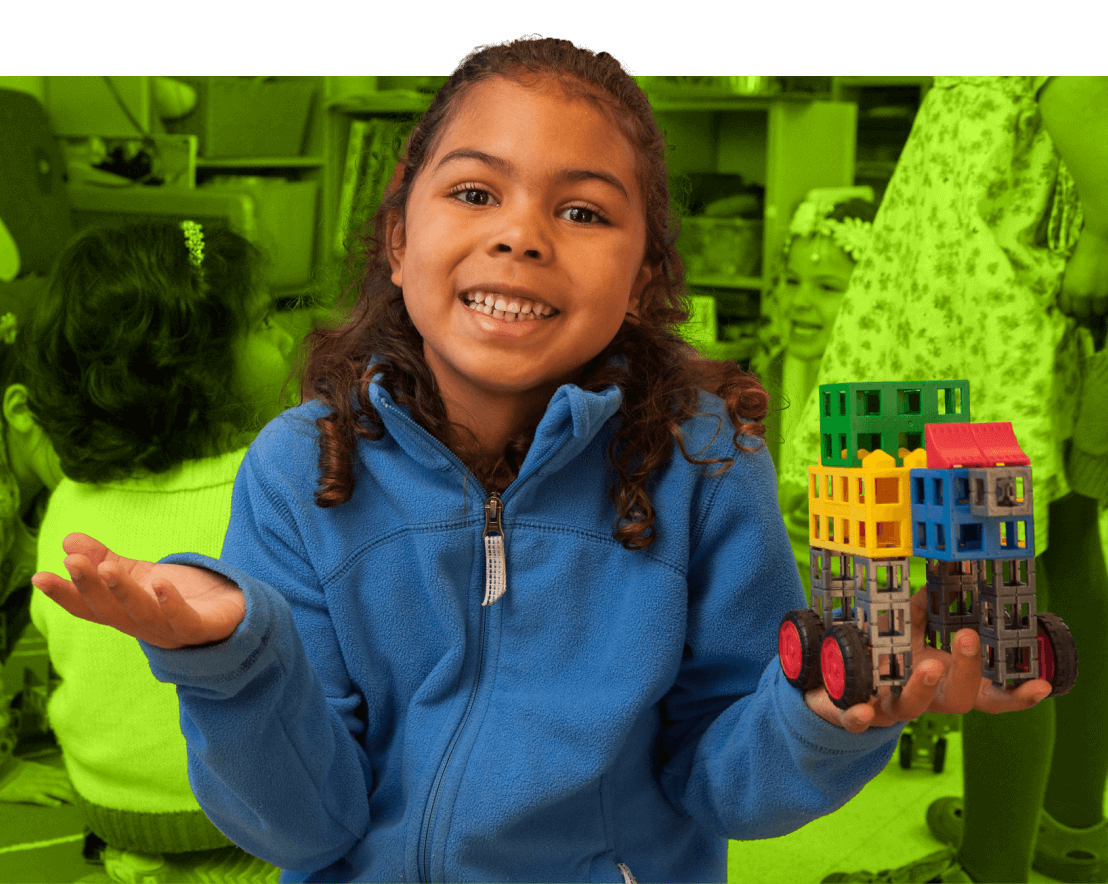
The Early Inventors STEM Lab is a hands-on kit of durable, reusable engineering materials designed specifically for young learners. Each lab serves one or two children and is intentionally built for accessibility so all children can participate.
The lab’s friction-fit building system lets young learners build confidently as they develop fine motor skills, spatial awareness, and creativity through invention and exploration.
2. A Robust Curriculum
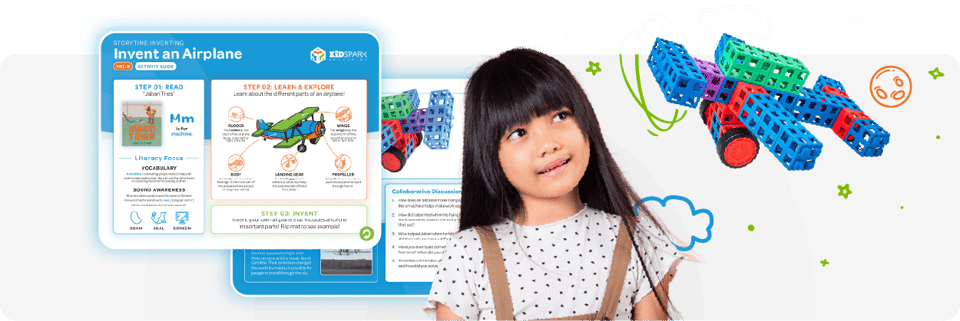
The curriculum includes more than 60 project-based lessons designed to spark curiosity and creativity.
There are two types of lessons:
STEM Foundations Lessons introduce children to early math, problem-solving, and engineering concepts.
Storytime Inventing Lessons connect children’s storybooks with STEM themes, strengthening literacy while turning each story into a hands-on building experience.
Each lesson is supported by ready-to-use teacher lesson plans, activity guides, and slide companions that make it easy to deliver engaging instruction.
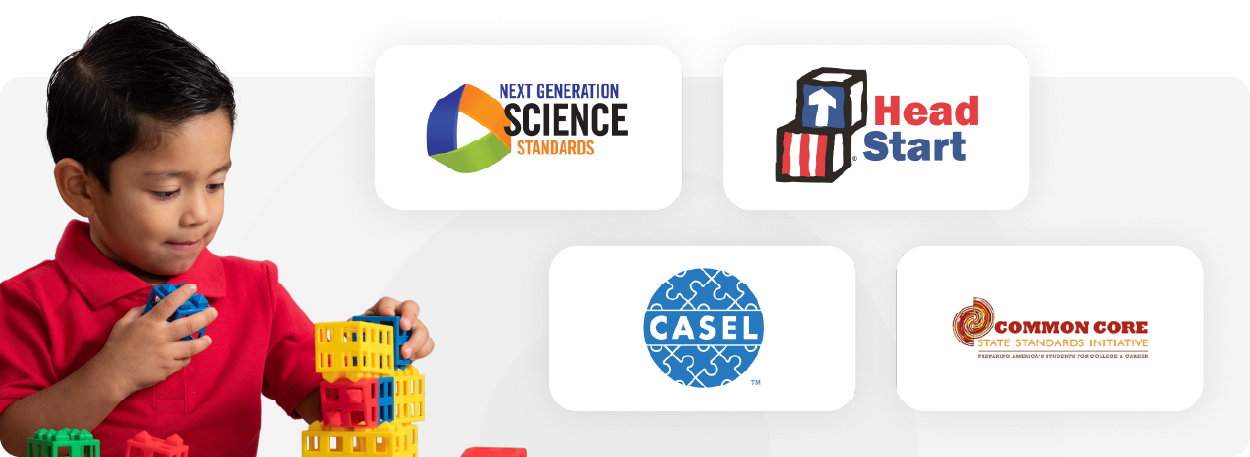
The curriculum is aligned with key standards, including the Next Generation Science Standards (NGSS), Common Core for Literacy, the Head Start Early Learning Outcomes Framework, and CASEL social–emotional learning competencies, helping teachers connect lessons to broader learning goals with confidence.
Together, these lessons help children build strong foundations in both STEM and literacy, and they also spark excitement for reading, especially for kids who might not otherwise connect with books, because every story becomes a chance to invent and create.
3. Professional Learning and Support

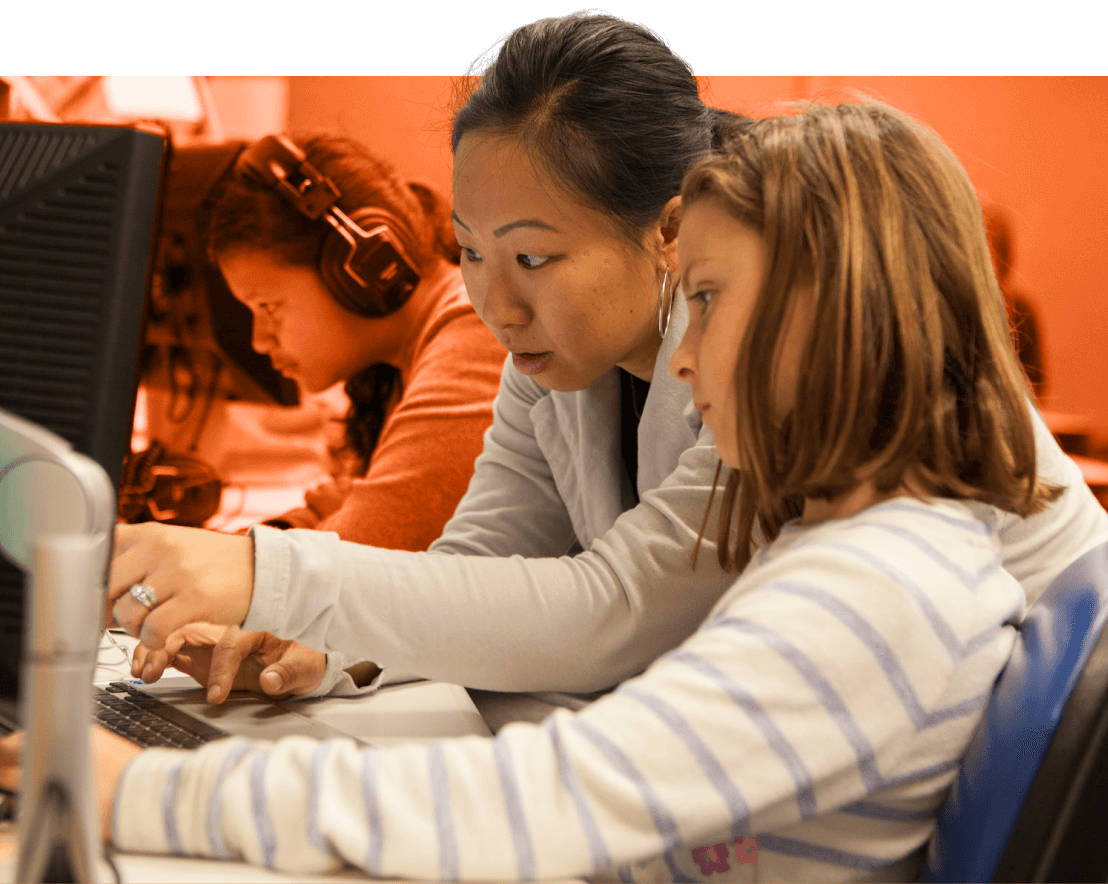
Kid Spark provides professional learning designed to help teachers and mentors, regardless of their STEM background, feel confident and equipped to guide hands-on learning.
Educators gain practical strategies for facilitating lessons, supporting student creativity, and connecting STEM and literacy in ways that fit their classroom and teaching style.
Grounded in Universal Design for Learning
Multiple Ways to Engage
Every child learns differently. That is why the program is built on Universal Design for Learning (UDL), ensuring multiple entry points for every lesson. Children can listen, build, discuss, or show what they know in different ways.
Removing Barriers for Diverse Learners
Every classroom is filled with different kinds of learners. UDL helps ensure that each child finds a way in. A student who struggles with reading can thrive while building and designing. A quiet child might light up when sharing their invention with peers. When learning is accessible, every student has the chance to be seen, heard, and successful.
Real Classroom Stories of Unexpected Success
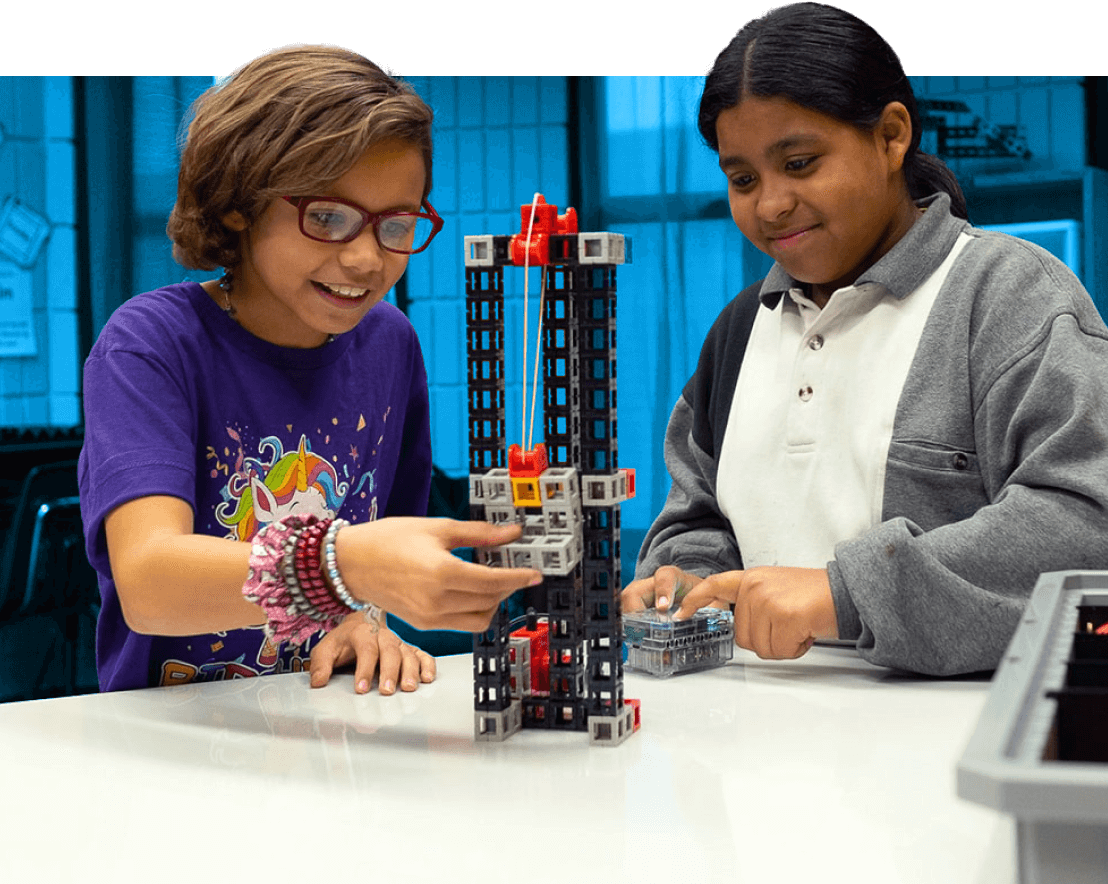
Teachers often tell us they are surprised by who excels in Kid Spark lessons. The child who struggles with worksheets may be the first to invent a clever design. These moments remind us that when barriers are removed, every child can succeed.
Collaboration with Special Olympics of Washington
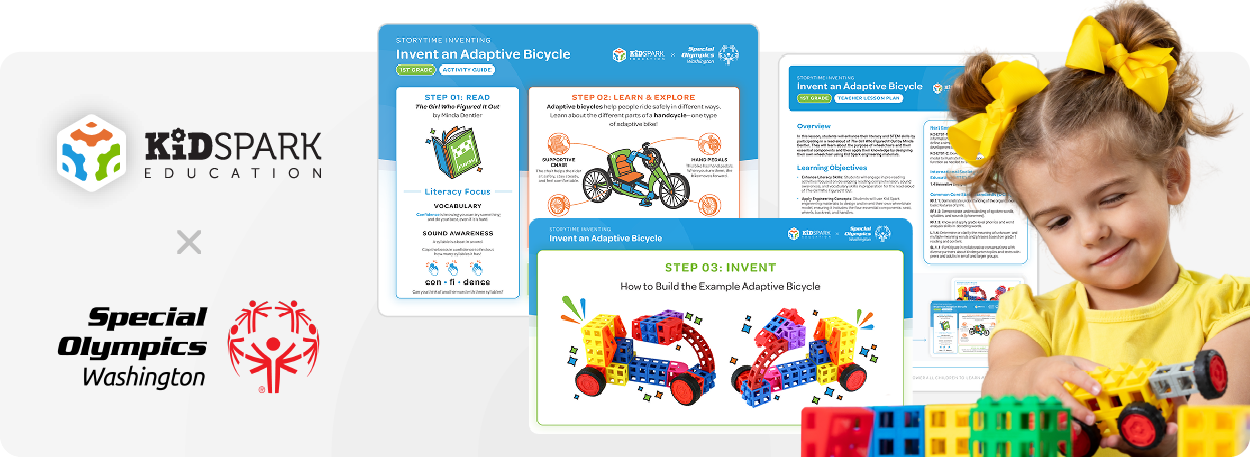
Storytime Inventing Lessons Focused on Inclusion & Empathy
As part of the program, 12 StoryTime Inventing lessons were co-developed with Special Olympics of Washington. These lessons highlight empathy, teamwork, and perseverance through stories and invention.
Connecting Literacy, STEM, and Sport
Students read sports-themed stories that highlight perseverance, teamwork, and inclusion. Then they apply those ideas through design and invention, exploring how they can make sports more inclusive and accessible for everyone.
These lessons invite students to design with empathy, think creatively about real-world challenges, and see how STEM can be a tool for building a more inclusive world.
Helping Children See Themselves as Capable in Every Arena
These lessons ensure children walk away with the confidence to say:
I can be part of STEM.
I can be part of sport.
I belong.
Benefits for Students and Teachers

What Students Gain from the Program
-
Build vocabulary and comprehension
-
Strengthen problem-solving and design thinking
-
Develop spatial awareness and fine motor skills
-
Practice perseverance and collaboration
-
Foster early STEM identity and confidence
How Teachers Benefit from the Program
-
Standards-aligned curriculum that connects STEM and literacy
-
Hands-on lessons that engage every learner
-
Confidence to teach STEM through a familiar and relatable medium: reading
-
Flexible resources adaptable for diverse classrooms
Together, these lessons help children build strong foundations in STEM and literacy and spark an excitement for learning that lasts.
Building Confidence from the Start
Redefining Literacy for the 21st Century
In the 21st century, being literate means more than learning to read, write, and do math. It also means developing a strong STEM identity and an inventive mindset, where children learn to understand how the world works and gain the skills and confidence to contribute to it.
Connecting STEM and Literacy from the Start
The Early Childhood STEM and Literacy Program helps young learners build these modern literacies together. Through hands-on exploration, meaningful stories, and guided invention, children learn to think critically, solve problems, and communicate their ideas with creativity and purpose.
A Vision for Confident, Creative Learners
At Kid Spark Education, we believe these are the skills every child needs to thrive because when students learn and love STEM early, they build the confidence to imagine, create, and shape a better world.
Learn more about bringing the Early Childhood STEM and Literacy Program to your classroom >
Expanding Access Through Funding and Partnerships
Removing Barriers to Early STEM and Literacy
Kid Spark recognizes that high-quality STEM and literacy programs are often out of reach for schools and afterschool programs in underserved communities. To address this, the organization helps remove financial barriers for those eager to adopt the new program through its STEM Grants Initiative, fundraising resources, and strategic partnerships.
Collaborating to Expand Opportunities
Kid Spark’s collaboration with corporations, foundations, and community organizations helps provide cost-free or reduced-cost programs where they are needed most. The organization continues to seek partners who share its commitment to making early STEM education accessible to every child.
Learn more about how to partner with Kid Spark Education >