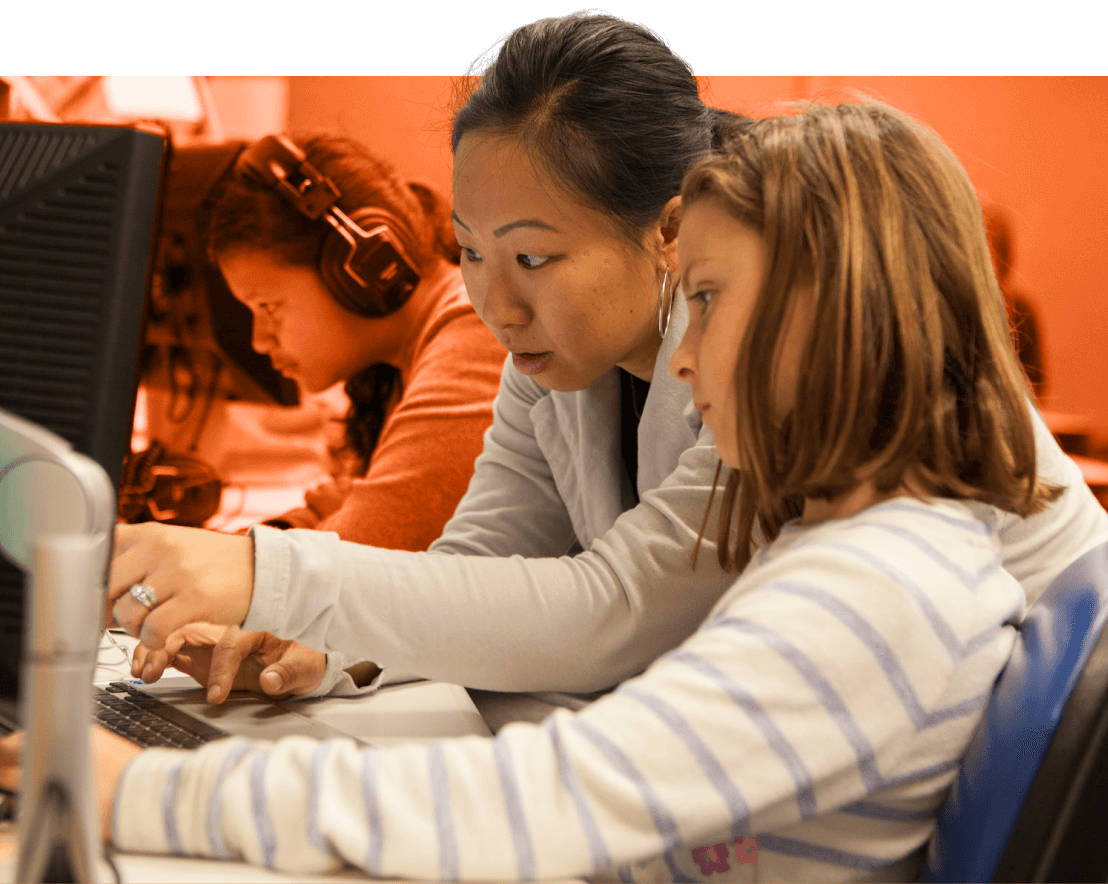

Screens have become a standard in classroom instruction. A recent informal study by The New York Times found that nearly every school provides devices for classroom use, with most students assigned their own device beginning in early elementary grades.
Digital tools have opened new possibilities in the classroom. Students can access information, work more efficiently, and engage with content in ways that were not possible before.
Simultaneously, as device use has become more common, new challenges are beginning to emerge. Across classrooms, educators are noticing common trends.
-
While students are completing assignments, they are not always developing a deep understanding of the concepts behind their work. Educators report students may be able to click through a digital assignment and select the correct answers, but struggle to explain the concept in their own words or apply it in a new situation.
-
Devices are often competing for students’ attention. Many teachers report that students use in-class devices for non-instructional purposes, creating challenges with focus, engagement, and classroom management.
-
High device usage is also beginning to impact how students interact and engage with one another. Educators are seeing declines in face-to-face communication, empathy, and collaboration.
These observations raise an important question: Where in the school day can we create meaningful opportunities for screen-free learning?
Building Learning Connections
Before we can rethink the role of screens in classrooms, it helps to step back and look at how learning actually happens.
Learning is not passive. It is a physical process.
When students explore new ideas or skills, their brains create and strengthen connections that form the foundation for future learning.
In the classroom, strengthening neural pathways looks like:
-
Skill repetition — Practicing a skill over and over helps students build strong brain pathways.
-
Applying knowledge — When students use a skill or idea, those connections grow stronger. If they are not used, those connections fade over time.
-
Emotion and engagement — When learning is meaningful and engaging, students remember it more deeply.
-
Requiring focus — Focused attention helps students store new information and make lasting connections.
The Unseen Impact of Screens on Learning
While devices can seem engaging, research shows that too much screen time can disrupt important learning processes.
1. Overstimulation and Reduced Focus
When children are exposed to fast-moving visuals and constant stimulation, their brains receive more information than they can process at one time. This overstimulation can make it harder to focus, increase emotional overwhelm, and, in some cases, trigger a “fight, flight, or freeze” response.
2. Weakened Neural Development
Research from the National Institutes of Health suggests that spending too much time on screens can slow the growth of important brain pathways that support language, reading, and critical thinking.
3. Impaired Executive Function
Spending long periods on devices can affect the parts of the brain that help students plan, remember, and manage their own learning.
4. “Crowding Out" Learning Experiences
When students spend more time on screens, they often miss out on:
-
Hands-on exploration
-
Social interaction
-
Creative opportunities
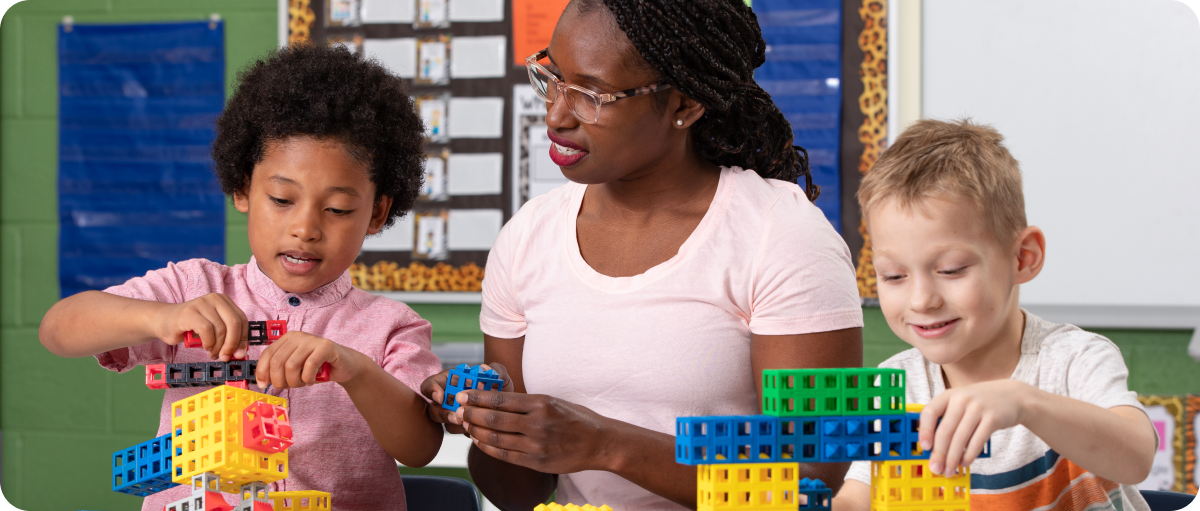
These hands-on, social, and creative experiences are what help children build strong brain connections and a lifelong love of learning.
How to Create Screen-Free Learning Opportunities
Creating more balanced, screen-free learning opportunities doesn’t require a complete shift away from technology. It starts with intentional decisions about when students engage with devices and when they benefit more from hands-on experiences.
For many educators, the most natural place to begin is within enrichment subjects like STEM.
For many educators, STEM is a natural place to create meaningful screen-free learning opportunities.
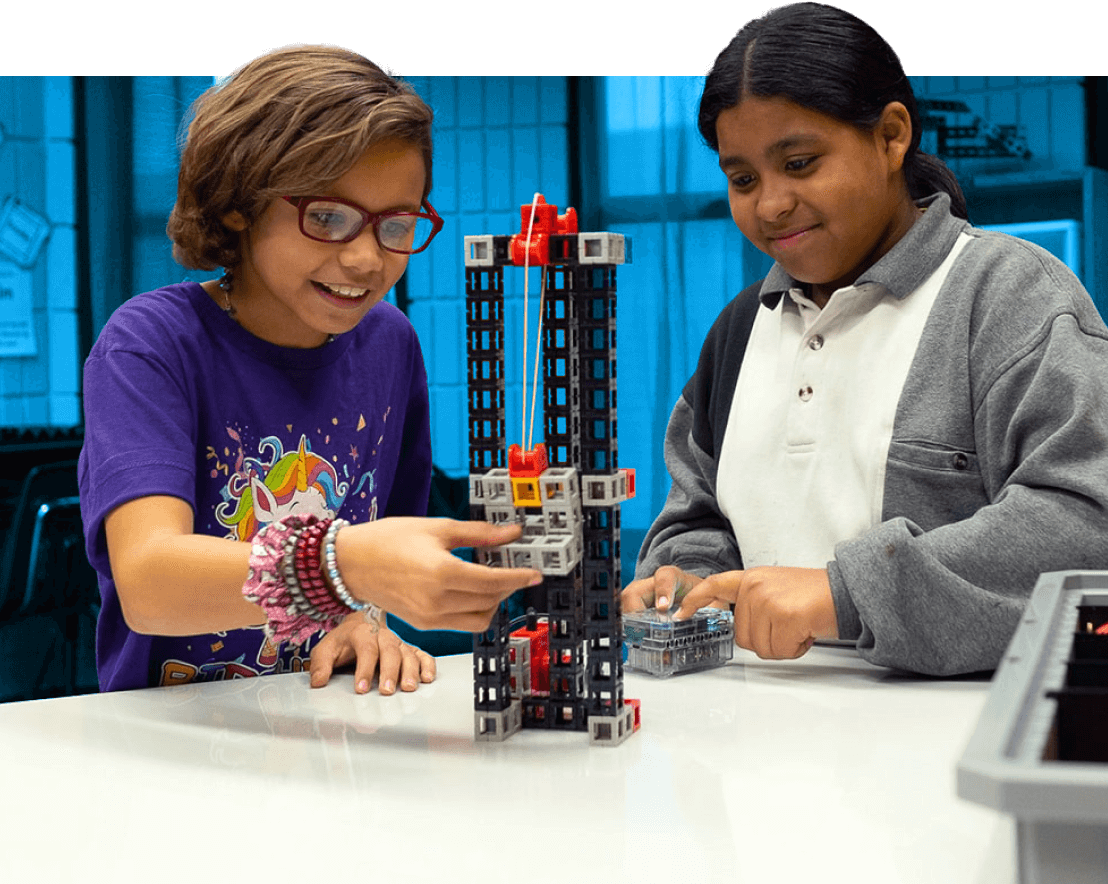
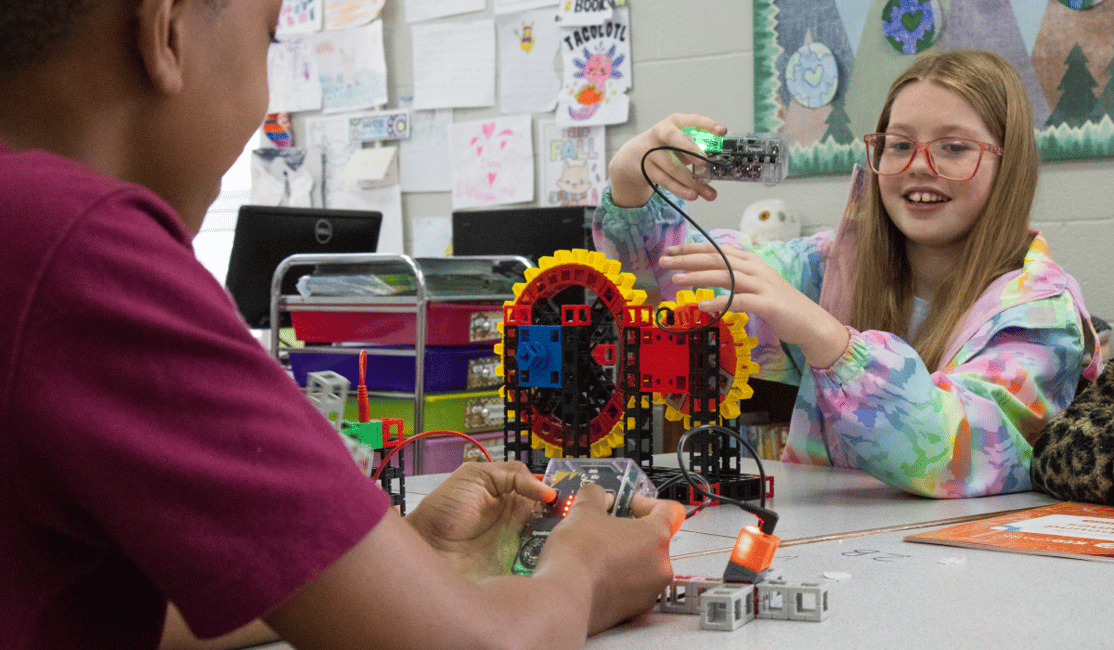
STEM invites students to explore, build, test ideas, solve problems, and collaborate with others. These active, hands-on experiences give students time away from devices while helping them develop deeper understanding and important skills.
From there, educators can expand these experiences in meaningful ways:
-
Incorporate storytelling and real-world problems to spark curiosity and encourage exploration
-
Encourage teamwork through collaborative projects that invite students to share ideas and learn from one another
-
Use open-ended materials that support multiple solutions and innovation
-
Prioritize mentor-guided instruction, to support student discovery
Even small changes can make a big difference in how students engage, collaborate, and grow as learners.
The Power of Hands-On STEM Learning
Hands-on STEM learning supports the way students naturally build understanding, engaging their minds through active exploration.
Research shows that when students actively engage with materials and ideas, they remember concepts more deeply than through passive methods like listening or watching.
As students build, test, and explore, they engage multiple systems simultaneously. Movement, touch, visual processing, and problem-solving all work together to strengthen neural connections. This supports lasting learning.
Hands-on STEM learning helps students develop a deeper understanding of concepts.

It encourages students to make decisions, adjust their thinking, and persist through challenges. Unlike screen-based activities, hands-on learning provides immediate, real-world feedback that helps students grow.
Over time, these experiences help students build not only knowledge, but also confidence, resilience, and the ability to think independently.
Preparing Students for a Digital World—Without More Screens
There’s a common assumption that preparing students for a technology-driven future means giving them more exposure to devices early and often.
But students do not become digitally prepared simply by spending more time on devices.
Digital literacy means evaluating information, thinking critically, communicating clearly, and solving problems in new situations.
These skills are referred to as the 4 Cs of 21st century skills:
-
Critical Thinking
-
Creativity
-
Collaboration
-
Communication
These are best developed through active, hands-on learning experiences that put students at the center.
Screen-free STEM environments provide exactly that.
They give students the opportunity to:
-
Think independently
-
Work through challenges
-
Communicate ideas clearly
-
Collaborate with peers
Screen-free STEM learning doesn’t limit students’ readiness for the future, it develops skills students will carry with them into digital environments and beyond.
Screen-Free STEM Learning With Kid Spark
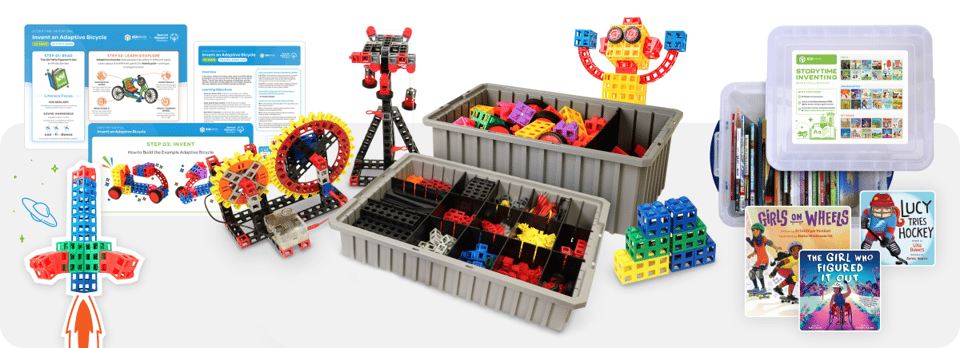
Creating more balanced, screen-free learning experiences doesn’t have to mean starting from scratch or adding more to your plate.
At Kid Spark Education, this approach is already built into a complete, ready-to-implement solution designed for real classrooms.
Kid Spark programs are intentionally designed to support hands-on, screen-free STEM learning. Instead of relying on devices to deliver content, students engage directly with engineering and robotics materials. They build, test, and refine their ideas as they develop a real understanding.
With structured curriculum, educator-facing lesson plans, and reusable STEM Labs, everything works together to reduce prep time while increasing the depth of learning. Lessons are designed to build skills over time, helping students grow from early exploration to confident problem-solving.
The result is a learning environment where students are more focused, more collaborative, and more invested in their work, without increasing screen time or instructional complexity.
Because the goal isn’t to remove technology altogether.
It’s to ensure that when technology is used, it enhances learning, not replaces the experiences that make it meaningful.
If you’re looking to create more balanced, screen-free STEM learning in your classroom or program, schedule a meeting with a Program Specialist to start building your program today.