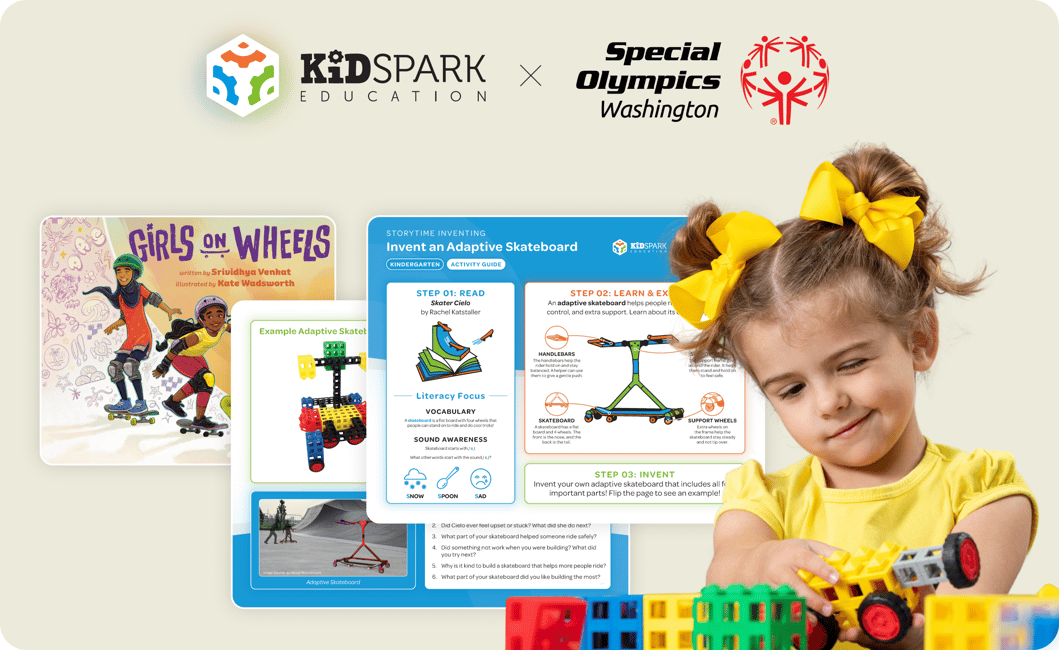
At Kid Spark Education, we believe STEM is for everyone. At Special Olympics Washington, inclusion through sport has always been the mission. Together, we asked a bold question:
What if children’s earliest experiences with STEM and literacy also helped them build empathy, teamwork, and the confidence to see themselves as capable of both STEM and sport?
The answer is a purposeful collaboration between Kid Spark Education and Special Olympics Washington. Through this partnership, we co-developed 12 inclusive Storytime Inventing lessons that blend hands-on STEM exploration with children's literature and social-emotional learning. Each lesson is intentionally designed to reflect the values of inclusion, collaboration, and accessibility. Rooted in Universal Design for Learning (UDL) and aligned with CASEL’s framework for social-emotional learning (SEL), we created 12 lessons that demonstrate what’s possible when education nurtures the whole child.
By blending literacy, STEM, and SEL into one integrated experience, these lessons equip children with not only academic skills but also the belief that they can thrive in STEM and imagine themselves participating in sports, two areas where many children, particularly those with disabilities or limited access, are too often left out.
A Closer Look at Storytime Inventing
As a part of Kid Spark's Early Childhood STEM & Literacy Program, Storytime Inventing lessons are intentionally structured around three steps that support the way children learn best: through stories, exploration, and invention.
Step 1: Read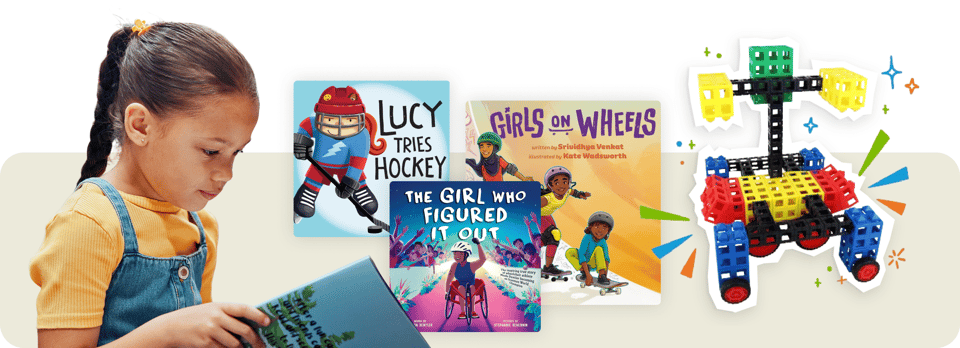
Each lesson begins with a storytime read-aloud paired with exploring new vocabulary, sound-letter connections, and early literacy skills. Carefully selected books introduce themes of inclusion, perseverance, and problem-solving in the context of sport and community. Reading together builds early literacy skills, strengthens comprehension, and sets the foundation for meaningful discussion.
Step 2: Learn and Explore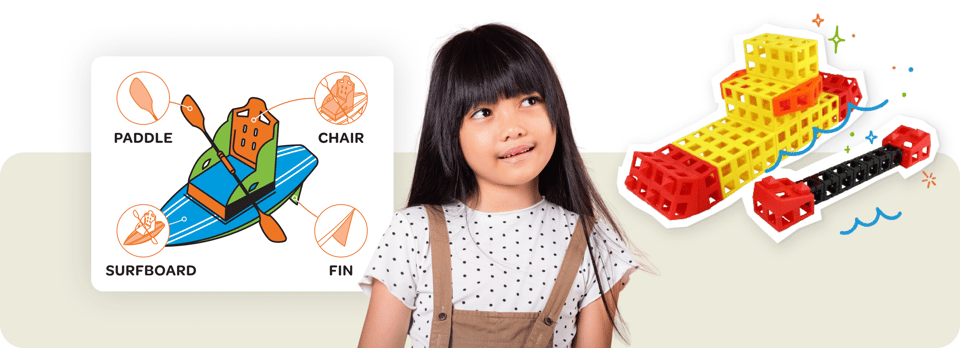
Students are then introduced to a STEM concept alongside a real-world technology or innovation that makes sport more inclusive. Examples may include adapted equipment, accessible tools, or thoughtful design features that help remove barriers to participation. Through teacher-guided discussion and age-appropriate examples, students begin to make connections between the story, STEM concepts, and the world around them.
These conversations help reinforce the idea that there are many ways people engage with activities and that design and technology play an important role in supporting inclusion.
Step 3: Invent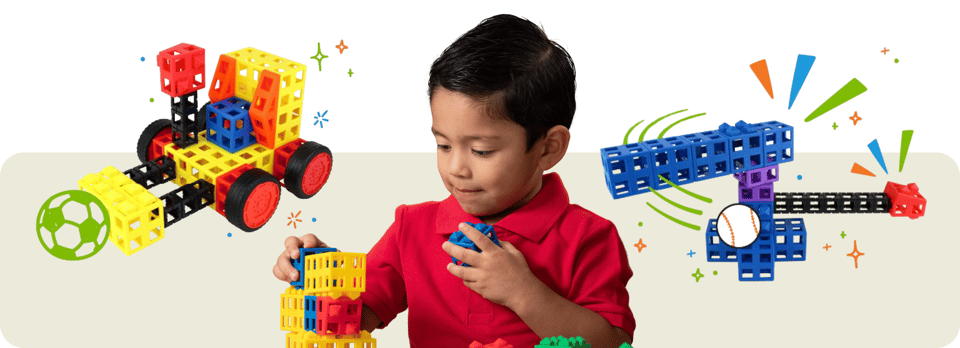
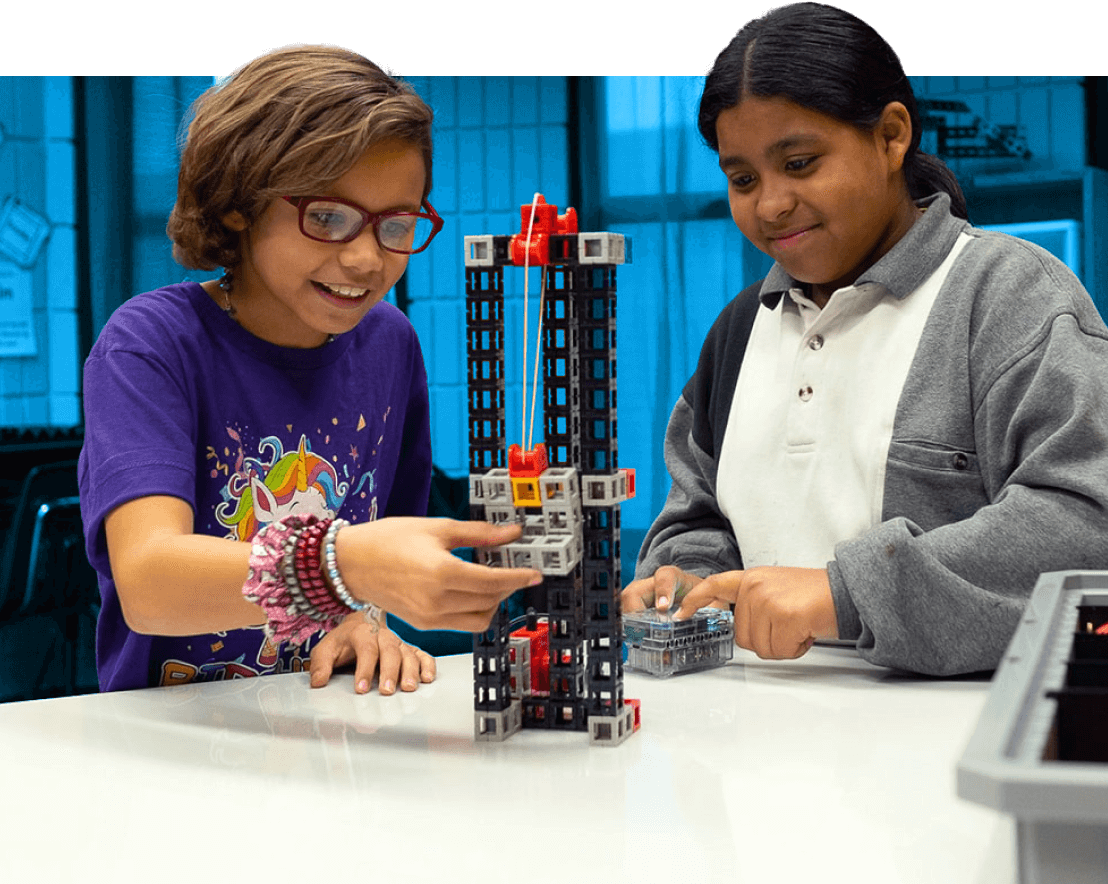
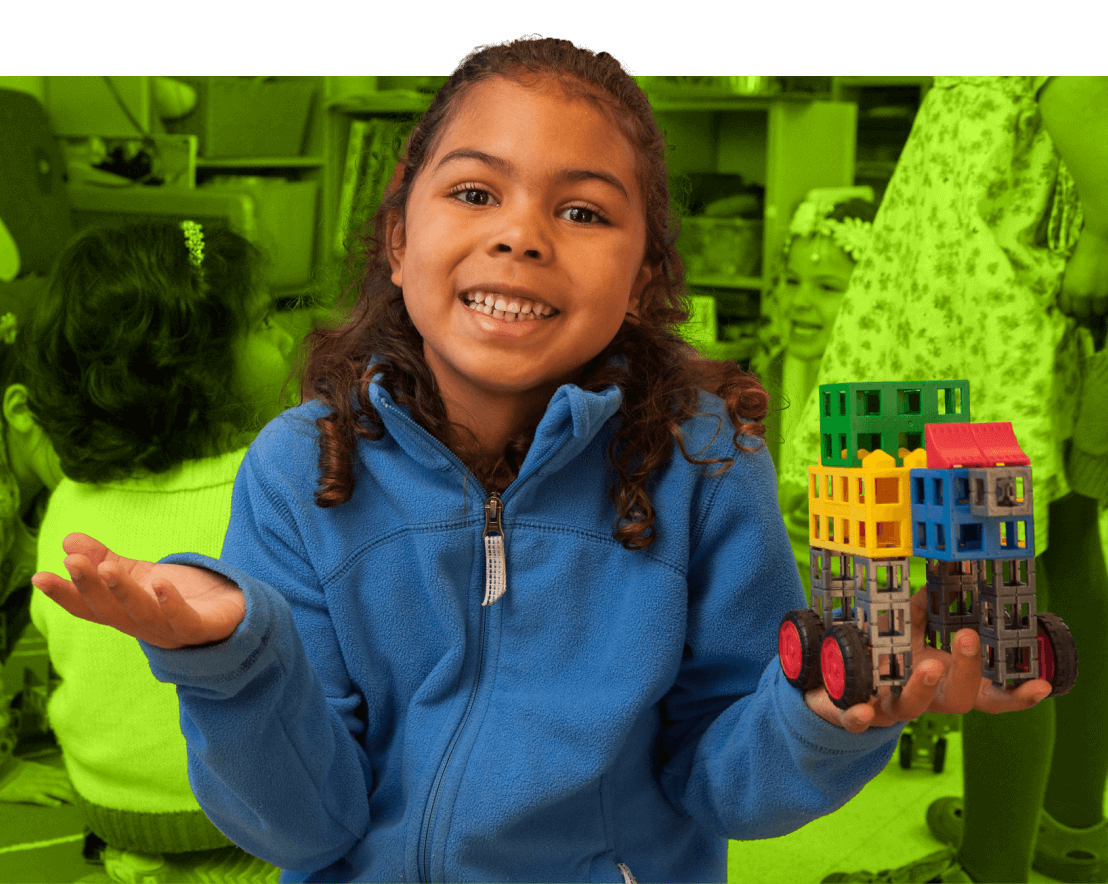
Using materials from Kid Spark Education’s Early Inventors STEM Lab, students design and build an invention inspired by the book and the STEM concept they explored. Educators guide students through the engineering process, encouraging collaboration, creativity, and reflection as children brainstorm ideas, build, and share their solutions.
This hands-on experience helps students practice problem-solving and persistence while seeing how their ideas can be used to support others. It reinforces the connection between literacy, STEM thinking, and inclusive design in a way that is concrete and developmentally appropriate.
Rooted in Universal Design for Learning (UDL)
Universal Design for Learning is a research-based framework that helps educators create flexible learning environments where all students can succeed. UDL emphasizes three pillars:
-
Engagement – motivating and sustaining students’ interest in learning.
-
Representation – presenting information in multiple ways to ensure accessibility.
-
Action & Expression – offering varied options for learners to demonstrate understanding.
This program’s design ensures that every child, regardless of background, ability, or learning style, can participate fully.
Teachers who have implemented Kid Spark programs in their classrooms frequently share that the students who don’t strive in other subjects often shine during the Kid Spark lessons. Hands-on invention provides a new lens for educators to see each child’s unique abilities, dismantling barriers that limit traditional measures of success.
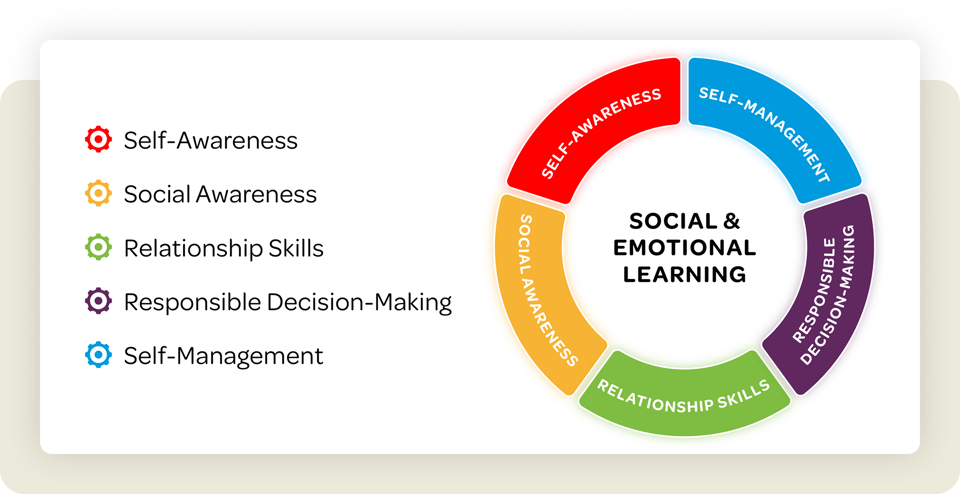
Aligned with CASEL: Social-Emotional Learning as the Foundation
The Collaborative for Academic, Social, and Emotional Learning (CASEL) identifies SEL as a cornerstone for success in school and beyond. This curriculum intentionally integrates all five CASEL competencies:
-
Self-Awareness – Children learn to recognize their emotions, strengths, and interests, such as when they identify a challenge they’d like to solve.
-
Self-Management – Students practice focus and perseverance as they design, test, and refine inventions.
-
Social Awareness – Stories about inclusion and adaptive sport foster empathy for others’ experiences.
-
Relationship Skills – Collaboration during invention challenges builds communication and teamwork.
-
Responsible Decision-Making – Children reflect on their ideas, consider outcomes, and adjust based on feedback.
Embedding SEL in literacy and STEM lessons doesn’t just prepare children academically. It also equips them with the confidence to engage in sports, take risks, and believe in their own capabilities.
Integrated Learning Best Practices Built Into Kid Spark Curriculum:
Kid Spark’s curriculum is designed to fit naturally into early childhood classrooms. Storytime Inventing lessons use real-world contexts, like inclusive sport, to help students connect their learning to familiar experiences. Visual supports such as books, images, and Kid Spark’s slide companions make abstract ideas easier to understand, while hands-on, project-based activities allow children to build, explain, and share their ideas. Scaffolded instruction and multimodal learning ensure every student can engage, grow, and show their understanding in meaningful ways.
This integration reflects the natural way young children learn: through connections, stories, and relationships. It also ensures that STEM and literacy learning don’t happen in isolation, but as part of a larger journey toward confidence and belonging.
More Than Curriculum: Building Confidence and Belonging
This program isn’t just about academics; it’s about identity and inclusion. Every lesson reinforces that all learners can participate, every child is a problem solver, and STEM and sport are for everyone.
The ultimate goal is that each child leaves these lessons believing:
-
“I can build.”
-
“I can solve problems.”
-
“I can be part of a team.”
-
“I can participate in STEM and in sport.”
This shift in mindset matters. When children internalize these beliefs early, they carry them forward, opening doors not just in school, but in their communities and futures.
Reflecting the Missions of Both Organizations
This program is a true reflection of aligned missions:
 |
Kid Spark Education's mission is to help all children learn and love STEM. |
 |
Special Olympics Washington works to foster inclusion, respect, and opportunity through sport and community. |
Together, these missions create something greater than the sum of their parts: a curriculum that prepares children academically, socially, and emotionally while reinforcing the truth that everyone belongs.
A Future Where Every Child Belongs in STEM and Sport
Imagine a classroom where every child, regardless of ability or background, not only learns to read and build but also sees themselves as capable of designing solutions, participating in sports, and collaborating with peers.
This is the future Kid Spark Education and Special Olympics Washington are working toward: one where integrated learning creates integrated impact, and where every child leaves the classroom knowing they belong in STEM, in sport, and in their communities.
Learn more about bringing this inclusive curriculum to your classroom or community. >